- About
- News
- Calendar
- Library
- Publications
- Support
-
 Book Club
The Judith Center Book Club is a bimonthly, hybrid (in-person and Zoom) reading group centered on a curated selection of texts examining gender and sexism. Each session features conversations supported by invited guests–artists, writers, and other cultural thinkers–whose work engages with the selected material. The program aims to deepen understanding of contemporary gender theory by tracing its historical foundations, social contexts, and evolving intersections with ecological and technological posthumanist thought. For more information, please email us at info@thejudithcenter.org.
Upcoming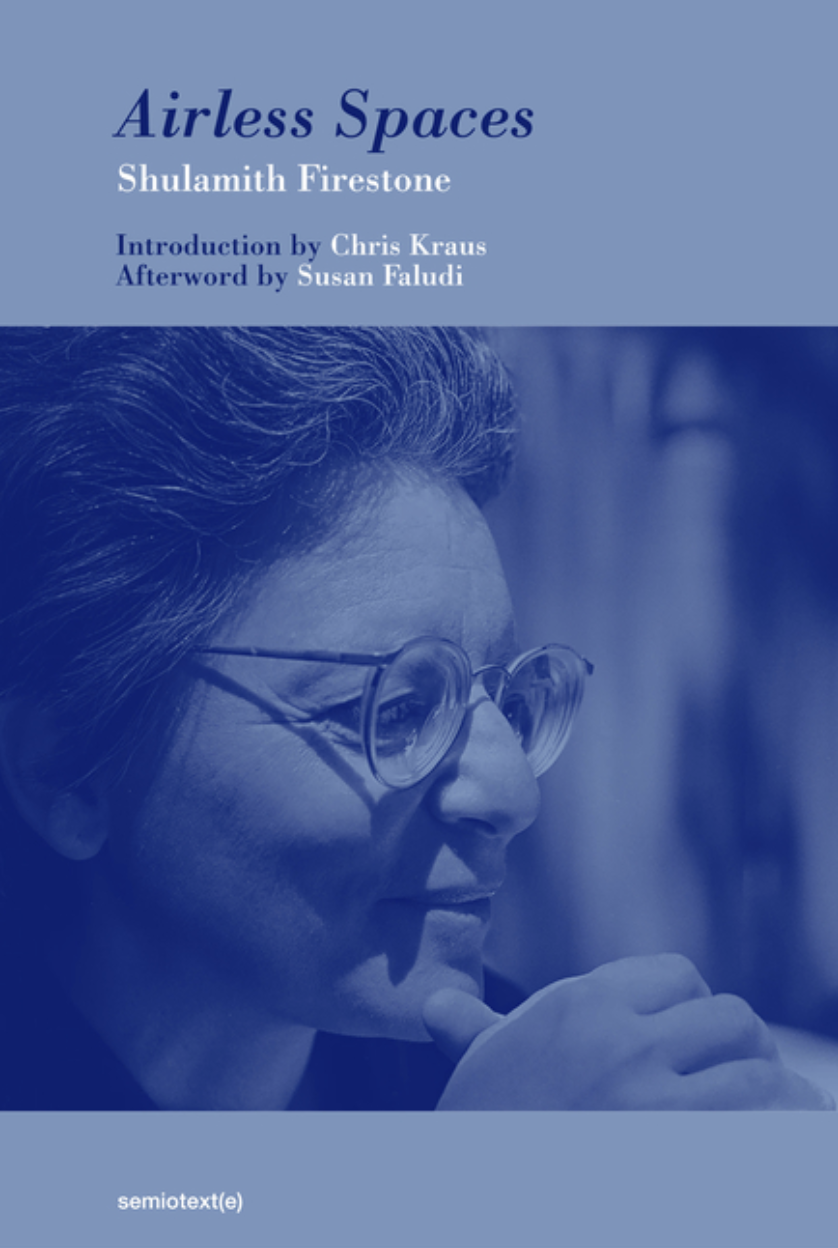 Book Club Session 05Shulamith Firestone: Airless Spaces (1998)Wednesday, October 21, 2026, 7–8:30 PM
The Judith Center / Los Angeles, CABuilding on our earlier examination of the work of Shulamith Firestone, The Judith Center Book Club Session 05 will feature Airless Spaces (1998), Firestone’s first and only work of fiction. Following the critical success of her first book, The Dialectic of Sex (1970), Firestone became disenchanted with the radical feminist movement she had helped establish in New York and withdrew from it, returning instead to the visual arts practice she had begun as a student at the School of the Art Institute of Chicago. Over the following decade, her life became increasingly unstable as she experienced repeated psychiatric hospitalization, culminating in a diagnosis of paranoid schizophrenia in 1987.
The second and final book published in her lifetime, Airless Spaces offers vignettes conjuring the complications and indignities rife within the bureaucracy of mental institutions, informed by Firestone’s own experiences. Following our previous discussion of Sylvère Lotringer’s investigation of “insanity” as a relational dynamic and a classification through which individuals are subjected to control in Mad Like Artaud (2015), we will further consider how mental institutions can subjugate the very patients they purport to cure. In her fictional prose, Firestone insists on the profound humanity of the patients confined within these “systems of care,” a recognition too often withheld from those deemed mentally ill.
We are excited to welcome renowned writer and novelist Chris Kraus as the session's guest speaker. Kraus is co-editor of Semiotext(e), which recently reissued Airless Spaces with a new introduction by Kraus. Participants are encouraged to read Kraus’s text as well as Emmeline Clein’s essay “Never a Patient Woman” (2025).
Find information about the event, where to source the book, and registration for first-time participants here.
Past Book Club Session 04Sylvère Lotringer: Mad Like Artaud (2015)Sunday, July 19, 2026, 4–6 PM
The Judith Center / Los Angeles, CAThe Judith Center Book Club Session 04 focuses on Sylvère Lotringer’s Mad Like Artaud (2015) as part of a larger foray into considering how the idea of “madness” is weaponized by authoritarian powers to control and silo subjugated groups.
According to the University of Minnesota Press, Lotringer explores the life of French dramatist, poet, actor, and theorist Antonin Artaud, whose “madness, like the plague, is contagious, and everyone, from his psychiatrists to his disciples, family, and critics, everyone who gets close to Artaud, seems to participate in his delirium. Sylvère Lotringer explores various embodiments of this shared delirium through what Artaud called ‘mental dramas’—a series of confrontations with his witnesses or ‘persecutors’ where we uncover the raw delirium at work, even in Lotringer himself.”
Using the author’s interview-focused publication as a point of departure, we will investigate “madness” as a relational dynamic, and the ways it is used as a politic of defiance to systems of order. This reading will serve as a primer for more nuanced conversations about the artworks and narratives featured in our upcoming exhibition, From the Inside: Presented by Just Detention International, featuring contributions from nearly one hundred individuals who have experienced trauma behind bars, including those who have been subjected to sexual abuse while incarcerated. To enrich our conversation, participants are also encouraged to read Susan Sontag’s “Approaching Artaud,” published in The New Yorker in 1973.
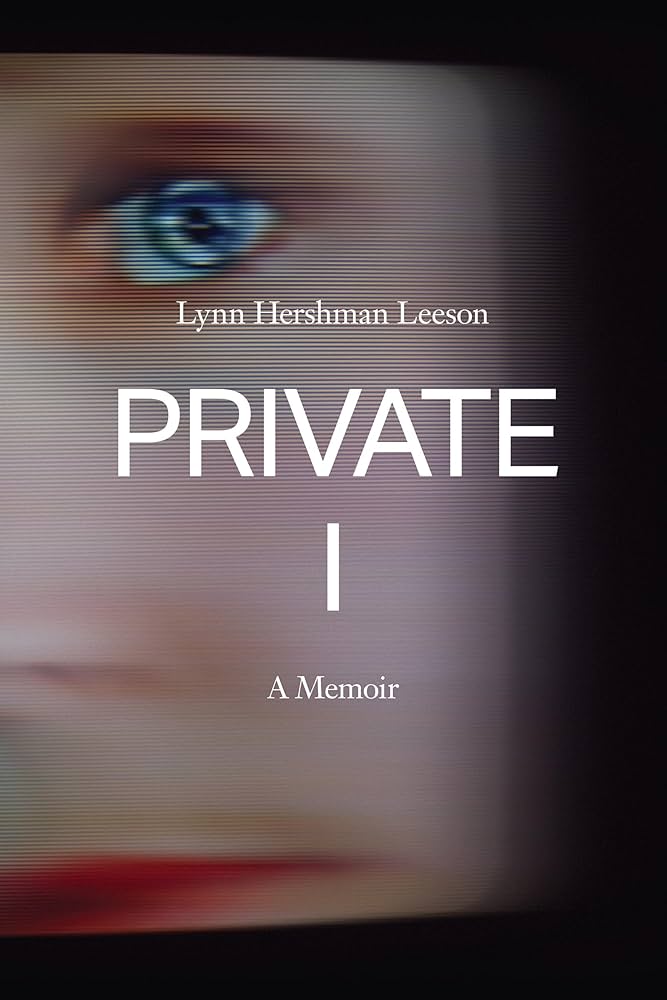 Book Club Session 03Lynn Hershman Leeson: Private I: A Memoir (2025)Wednesday, May 20, 2026, 7–8:30 PM
The Judith Center / Los Angeles, CAOn Wednesday, May 20, 2026, from 7-8:30 PM we will host Book Club Session 03, an exploration of Lynn Hershman Leeson’s Private I: A Memoir (ZE Books, 2025), at The Judith Center (with options to participate via Zoom).
Building on our last session, we will expand our exploration of how gender has informed critical responses to technological development from the 1970s through today with Leeson’s retrospective text, which underscores technology’s corrosive applications in systems of repression, surveillance, and censorship. In her trailblazing practice, she imaginatively disarms technology by using it as a creative medium to platform progressive ideas—fabricating distorted, surreal, and alternate realities that probe technology’s encroaching influence on identity and society. This builds upon our prior session focused on Shulamith Firestone’s more utopian vision for technology’s liberatory potential. Attendees are encouraged to read "In Conversation: Lynn Hershman Leeson with Michelle Handelman" (Brooklyn Rail, November 2025). Tom Teicholz—an award-winning journalist, author of the Substack The Enthusiast by Tom Teicholz, and Editor of Private I: A Memoir—will join for the conversation.
Our bimonthly reading group spotlights a curated selection of texts that examine gender and sexism. Each session features conversations guided by guest artists, writers, and cultural thinkers whose work engages with the reading’s subject matter. With each session, the book club aspires to deepen our understanding of contemporary gender theory by tracing its historical foundations, social contexts, and evolving intersections with ecological and technological posthumanist thought. This event is free and open to the public, and will be hosted in a wheelchair-accessible building. To confirm your place, share specific questions or requests related to the event, source a copy of the book, or learn more about The Judith Center and our programs, please contact us at info@thejudithcenter.org.
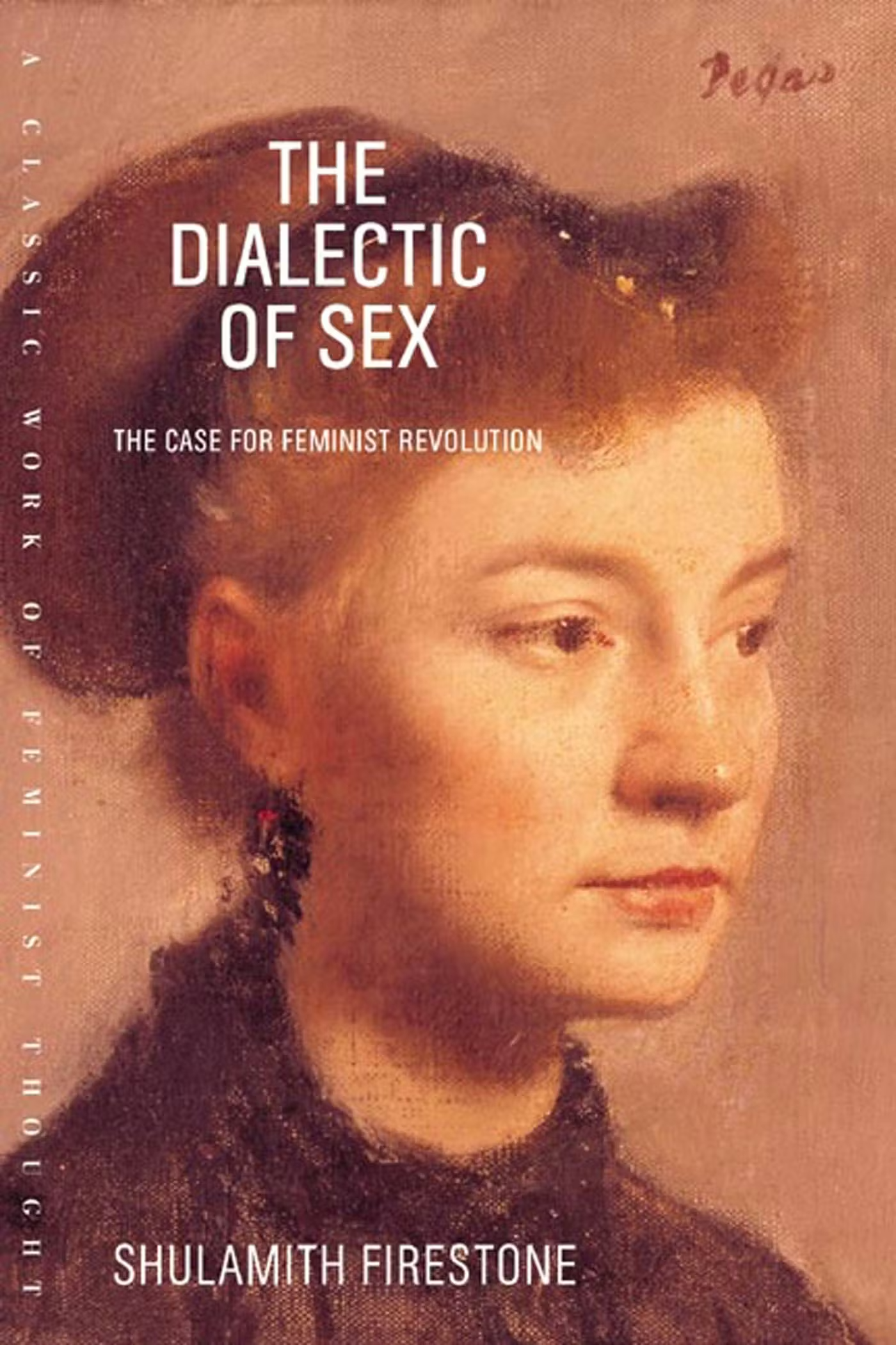 Book Club Session 02Shulamith Firestone: The Dialectic of SexWednesday, March 18, 2026, 7–8:30 PM
The Judith Center / Los Angeles, CAThe second installment of The Judith Center Book Club focuses on Shulamith Firestone’s The Dialectic of Sex (1970), a foundational feminist text that questioned the idea of gender as natural or fixed and reimagined it as a political and material system shaped by social arrangements. Writing decades ahead of much contemporary theory, Firestone traced gender hierarchy to reproductive labor and the structure of family life, showing how biological difference becomes oppressive through how it is organized and enforced. Her forward-looking engagement with technology as a possible site of feminist intervention—particularly in relation to reproduction—anticipated later anti-naturalist and technomaterialist approaches to gender, including strands of contemporary thought such as xenofeminism. Lana Dee Povitz, the Assistant Professor of History at Middlebury College currently authoring a biography of Firestone, joins the book club as a special guest.
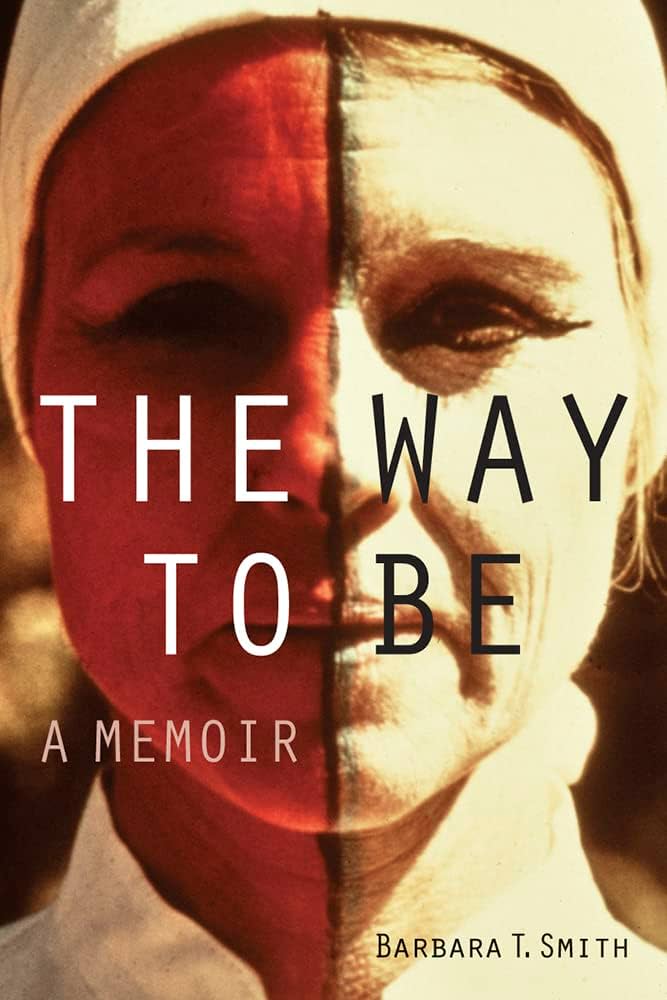 Book Club Session 01Barbara T. Smith: The Way to Be
The first installment of The Judith Center Book Club focuses on Barbara T. Smith’s memoir The Way to Be (2023), an autobiographical chronicle of the artist’s pioneering practice. The book also recounts her dialogues with other artists in her generation in Los Angeles and abroad, as well as her inroads into the 20th century’s male-dominated canon. For more context, participants discuss “Being Eaten: Barbara T. Smith’s Ritual Meal” in Emily Elizabeth Goodman's Food, Feminism, and Women’s Art in 1970s Southern California (2022). The event concludes with an in-person Q&A between Smith, Mara McCarthy, Founder of the Los Angeles gallery The Box, and Michael Ned Holte, the curator of how we are in time and space: Nancy Buchanan, Marcia Hafif, Barbara T. Smith (2022) at the Armory Center for the Arts in Pasadena.
DonateThe Judith Center's programs are made possible through grants and the generosity of individual donors and volunteers. We are a
501(c)(3) and all contributions are tax-deductible. Please donate here or contact us here to learn about other ways to support our mission.


